
What to Do About a Roof Leak: Emergency Steps for Minnetonka Homeowners
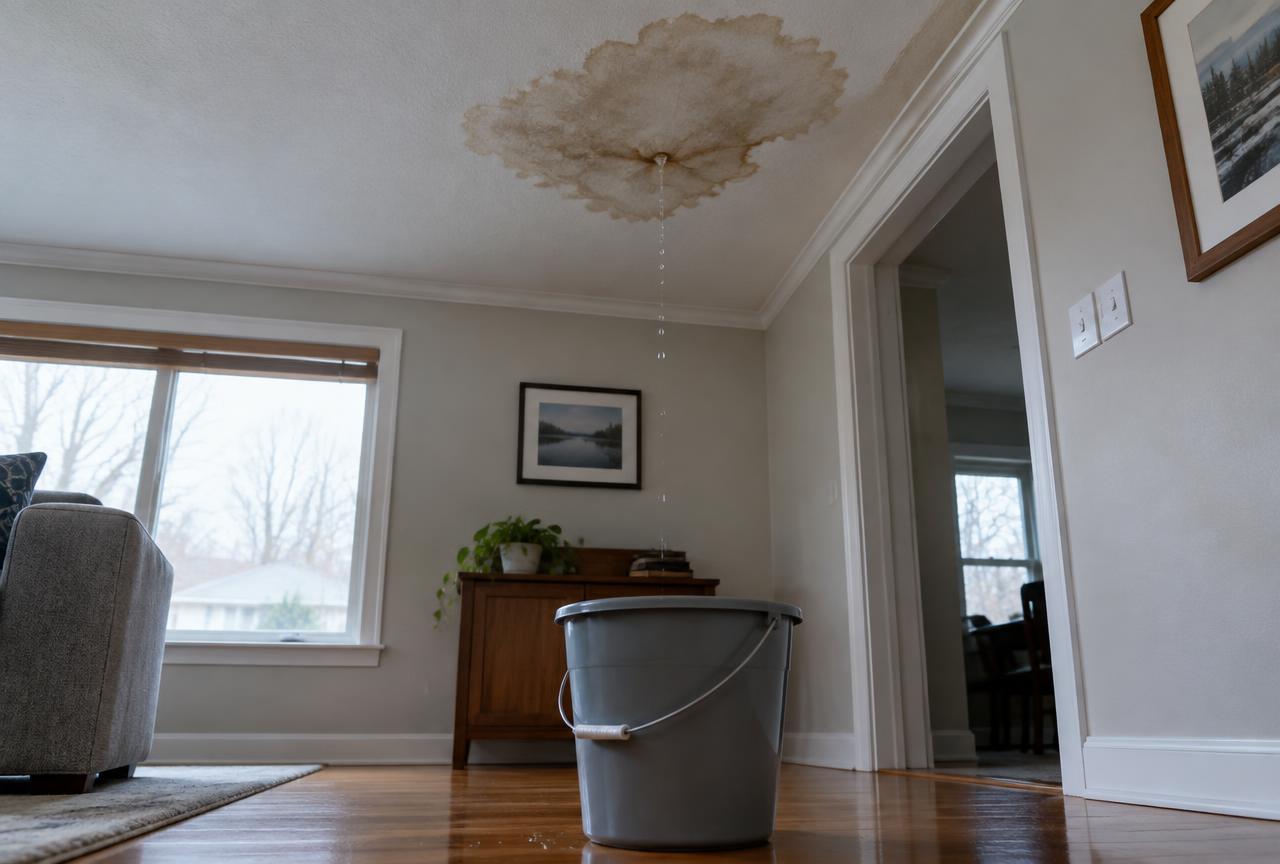
A leak almost never shows up where the water actually got in. It travels along rafters and roof decking, sometimes for several feet, before it finally drips through your ceiling in Minnetonka, Wayzata, or Hopkins. That's why so many homeowners feel caught off guard the day it happens, even though the damage started well before they noticed it. Here's what to do in the first hour, and what can wait until a roofer gets there.
Step 1: Contain the water before you do anything else
Move furniture, electronics, and anything that can't get wet out from under the leak. Set a bucket, trash can, or towels under the drip. If you see a bulge forming in the ceiling drywall, poke a small hole in the center of it with a screwdriver so the water drains in a controlled spot instead of collapsing the whole section. It feels wrong to poke a hole in your own ceiling, but it's a lot cheaper than a full drywall replacement.
If water is pooling anywhere near an outlet or light fixture, shut off power to that circuit at the breaker before you do anything else.
Step 2: Figure out roughly where it's coming from
Because water travels before it drips, the wet spot on your ceiling usually isn't directly under the source. If it's safe and dry enough to get into the attic, bring a flashlight and look for a wet trail along the rafters or decking. It usually points uphill toward the actual entry point.
The most common entry points we find on west metro roofs are these.
- Flashing around chimneys, skylights, and roof vents that has pulled loose or rusted through.
- Valleys where two roof slopes meet, especially on older roofs.
- Cracked, curled, or missing shingles.
- Nail pops that have worked their way through the shingle over time.
- Ice dams backing water up under the shingles in winter, which we cover in our post on ice dams in Minnesota.
Step 3: Do what you can safely, and leave the rest to a roofer
Do not get on a wet or icy roof. A slip on a pitched roof is a far bigger problem than a leak. If you can safely tarp the area from a ladder, a tarp secured under the shingle course above the damage and weighted down at the edges will buy you time until a crew can get out.
Take photos of the damage and the tarp setup before you cover anything, both for your own records and for insurance if you end up filing a claim.
Is this an emergency, or can it wait a day or two?
Call a roofer the same day if water is actively dripping inside the house, water is anywhere near electrical, or you see a ceiling that's sagging or bulging. A small stable stain that isn't growing can usually wait for a scheduled inspection, but it's still worth getting looked at soon. A minor leak left alone through a Minnesota winter rarely stays minor.
Will insurance cover it?
It depends on what caused the leak. Sudden damage from a storm, wind, hail, or a fallen branch is usually covered. A leak caused by age, wear, or a roof that's simply past its service life typically isn't. That's one of the first things we sort out during an inspection, because it changes what happens next. If a storm is the likely cause, our guide to what to do after a hail storm walks through what adjusters look for.
Get it fixed right, not patched over
Not every leak means you need a new roof. Sometimes it's one section of flashing or a handful of shingles. Other times it's a sign the roof underneath is failing and a patch would just delay a bigger problem. We'll tell you which one you're dealing with and why, before we recommend anything.
Get a real look at what's going on
If your roof is leaking anywhere in Minnetonka or the west metro, call Rocket Roofing at 952.649.6449 or request a fast quote. We'll find the source, tell you straight whether it's a repair or something bigger, and get it handled before it costs you more.
Ready for a straight answer?
Rocket Roofing inspects first, documents with photos, and backs every job with our satisfaction guarantee. High standards, higher quality.