
Can You Replace a Roof in Winter in Minnesota?
Quick answer
Yes, a roof can be replaced in winter, but not on every roof or every day. The shingles have to be installed within their manufacturer's requirements, and the roof has to be safe to work on. If yours is leaking, don't wait for spring to get help.
When a neighbor asks me whether a roof can be replaced in a Minnesota winter, I look at the roof, the weather and the material. Snow and ice can stop the work. Cold changes how shingles handle and seal. If water's getting inside, protecting the house safely comes first. Then we figure out what needs fixing now and what can wait.
Cold asphalt and sealant
Cold asphalt shingles aren't as flexible as warm ones. Storage, handling and fastening matter. The roofer needs to know the temperature limits for that exact product. If the forecast changes or the roof freezes over, the plan changes too. A scheduled date isn't a reason to force a bad installation.
The sealant strips are another part of that decision. Asphalt shingles have adhesive strips that bond the courses together. Cold can slow that bond or keep it from forming. That doesn't rule out all cold-weather work. It means the installer has to follow the shingle manufacturer's instructions, including any extra steps for strips that haven't sealed. You want those details worked out before shingles go on, not after the next windstorm.
I'd want a straight explanation of how the shingles will be handled and sealed. Not a promise that every product works the same way. Sometimes the answer is a different method allowed by the manufacturer. Sometimes it's a different day. Don't rush material that isn't ready.
Why underlayment and ice-and-water protection matter
I look below the shingles too. Underlayment, flashing and ice-and-water protection help keep water out, especially when ice dams back water toward the eaves. Replacement is the time to check those layers, the decking and ventilation together. New shingles won't fix a problem underneath them.
Compare what's in each replacement bid. What protection goes at the eaves and roof openings? Is the flashing being addressed? One leaking flashing detail is different from wear across several slopes or damaged decking. The inspection should explain the difference, and the scope should show the work.
Ice-and-water protection doesn't stop an ice dam from forming. Heat leaking into the attic and poor ventilation can warm the roof unevenly and melt snow. That water refreezes at the colder edge. Gutters and attic airflow need a look too. I don't want you fixing the water stain every winter while the same heat-loss problem keeps making ice above it.
Snow, ice, and safety
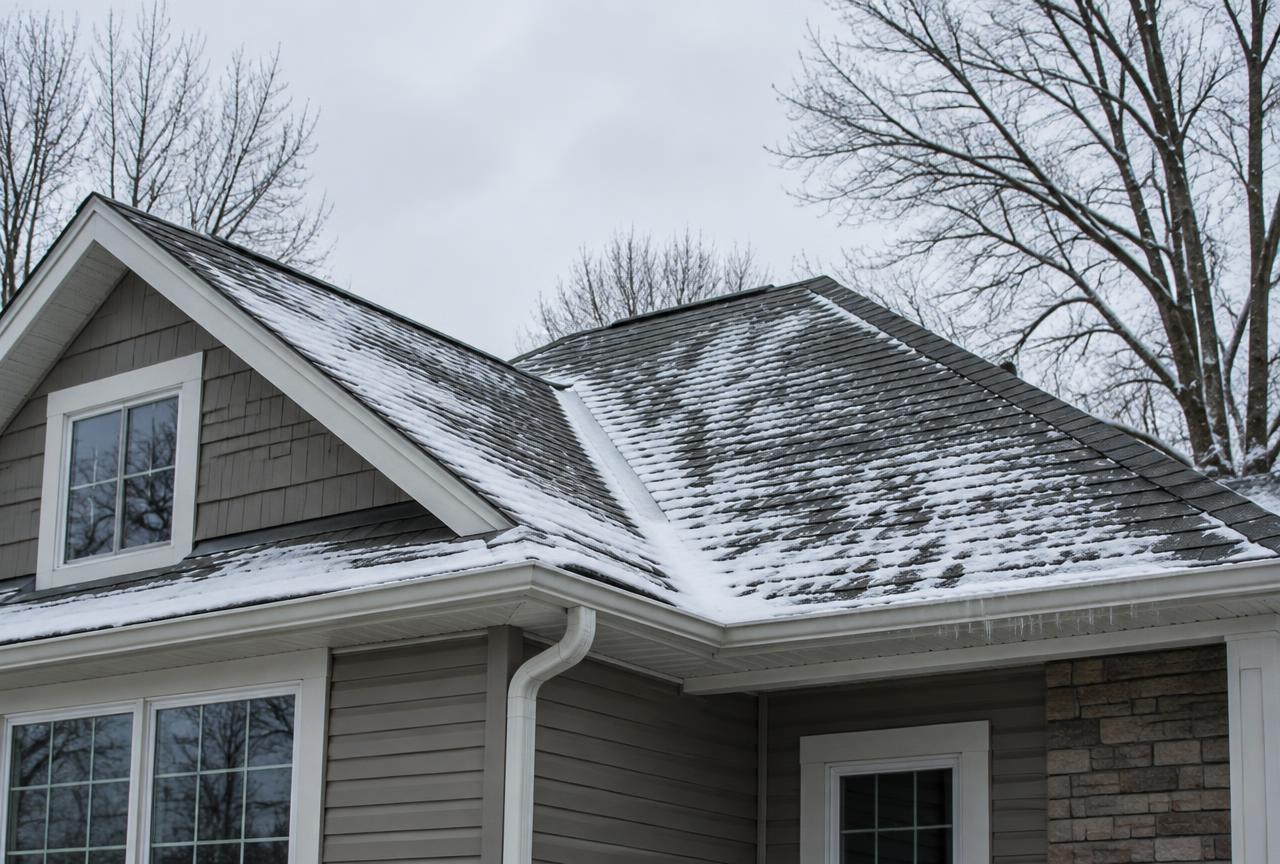
Please don't climb onto a snowy or icy roof to check shingles, shovel snow, patch a leak or put up a tarp. A ladder can be slippery too. Snow can hide soft or damaged spots you can't see. Stay on the ground and note what you can safely see: missing shingles, icicles or a sagging roofline. Leave roof access to trained professionals with the right safety equipment and conditions.
Snow can hide the damaged area. Ice can make access unsafe. Even after scheduling, weather can change what a crew can do. The roof has to be safe and the material needs suitable conditions. I'd rather explain a delay than put a schedule ahead of safety or quality.
If water's dripping inside, move your belongings and catch the water while you get help. If it's near a light fixture or outlet, shut off that circuit at the breaker if you can do it safely. Stay away from a sagging or bulging ceiling. Don't stand underneath it or poke a hole in it if it looks unstable. Those aren't problems to leave until warmer weather.
Urgent problem or work that can wait for spring?
An active leak, water near electrical equipment, a sagging ceiling or an opening that leaves the house exposed needs attention now. Letting it leak until spring only gives water more time to damage the inside. A roofer needs to look at the immediate problem and work out a safe repair or temporary protection. That doesn't mean a full replacement can happen right then.
An older roof that's dry inside and hasn't taken new damage might wait for spring or fall after an inspection. Age alone isn't enough. I check for curling shingles, granule loss, daylight in the attic, soft decking and repeat leaks. One bad flashing detail on an otherwise sound roof can call for repair.
Temporary repairs and tarping
A tarp or temporary repair can limit water entry while permanent work is arranged. But a tarp isn't magic. The roof shape, damaged area, wind, snow and ice all affect whether it can be secured safely and what it will cover. Don't make winter tarping a do-it-yourself project. Getting onto a slippery roof or working from an unsafe ladder isn't worth the risk.
Temporary protection needs a follow-up plan. You should know what it covers, what it doesn't and when someone will check it again. Keep photos and dates of the interior damage and any temporary work. If a storm caused the problem, those records help you talk with your insurance company. Your insurer decides coverage after reviewing the damage and your policy. A tarp doesn't tell you what a claim will pay.
What a winter inspection should tell you
A winter inspection should give you more than a quick look at the snow. I want you to know what was visible, what couldn't be checked safely and what's still hidden. Photos help when conditions allow. The inspection should cover shingles, flashing, roof edges, ventilation and signs of water coming inside. You should leave knowing whether the next step is temporary protection, a focused repair or a replacement plan.
An isolated problem on an otherwise solid roof deserves a look at repair, especially if matching materials are available. Failing slopes, damaged decking or recurring repairs can point toward replacement. You deserve an explanation of the findings, not just a number and a place to sign.
If spring is the plan, book early
If the roof can safely wait for spring, plan before the first warm stretch. Winter damage, storm work and postponed jobs all compete for dates. An early inspection gives you time to understand the scope, compare materials and schedule. Don't assume a roof can wait just because it hasn't leaked.
Not sure which situation you're in? Call me at 952.649.6449, 7am to 7pm every day, or use the homepage quote form. We'll talk through your roof and the next step. I've also put together guides to getting your roof ready for Minnesota winter, why fall is the best time to replace a roof, and ice dams in Minnesota. Read about roof repair, roof replacement, and our service areas. If water's already getting in, start with the roof leak emergency guide.
Frequently asked questions
Can you install a composite shake roof in winter in Minnesota?
Some composite shake products can be installed in cold weather, but they're not all the same. I'd check the exact product's temperature limits and installation instructions first. Snow, ice or unsafe roof access can still stop the work.
Can asphalt shingles be installed in cold weather?
Sometimes, yes. Cold can keep the sealant strips from bonding, so the installer has to follow the instructions for those shingles and account for the weather. If the conditions aren't right, don't force it.
Should I wait until spring to fix a roof leak?
No, not if water's coming inside. Get help now, especially if water's near electrical equipment or the ceiling is sagging. A safe repair or temporary protection can be the next step even when full replacement has to wait.
Is it safe to tarp my roof myself in winter?
No. Stay off a snowy or icy roof, and don't try to secure a tarp from an unsafe ladder. Call a professional to work out safe temporary protection.
When should I book a spring roof replacement?
Once an inspection shows it can safely wait, start planning. Spring gets busy with winter damage and postponed work. An early conversation gives you time to compare the scope, materials and dates.
Need help with this on your own home? See our roof replacement service or check the Minnetonka and west metro cities we serve.
Ready for a straight answer?
Rocket Roofing inspects first, documents with photos, and backs every job with our satisfaction guarantee. High standards, higher quality.